
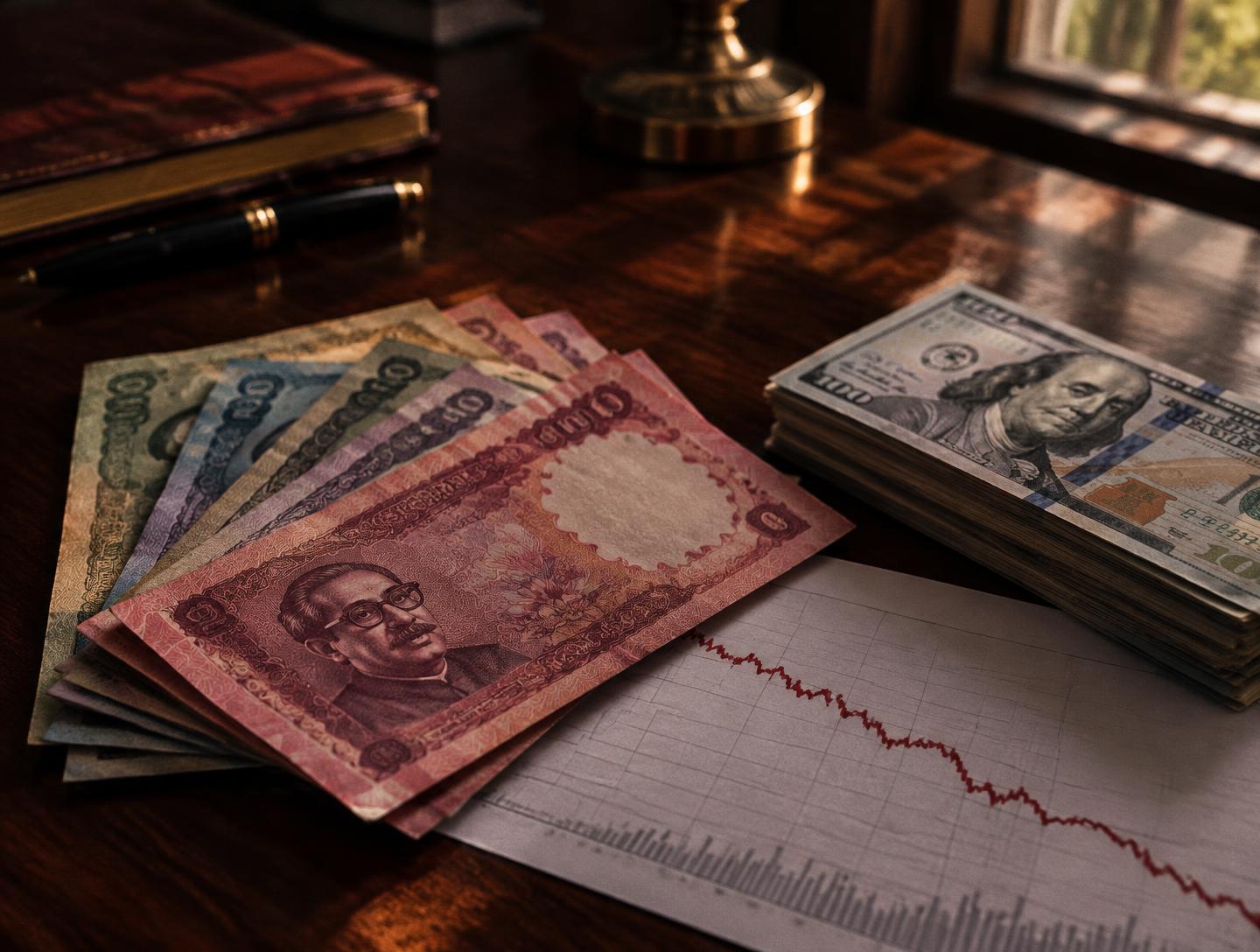
The taka slid to a fresh low against the US dollar this week, extending a run of weakness that traders say has become harder to arrest. Dealers described thin dollar supply in the interbank market, with banks bidding higher to settle letters of credit opened for fuel, edible oil and raw materials for factories.
For households, the move arrives as a bill rather than a headline. Importers say a weaker taka raises the landed cost of basic goods within weeks, and retailers have begun passing part of that on. Prices of cooking oil, lentils and packaged foods have edged up in Dhaka markets, while school fees, medicine and rent leave most families with little room to absorb the increase.
Pressure on reserves is part of the story. Outflows to pay for energy and imported inputs have run ahead of inflows from garments exports, and although remittances remain strong, officials acknowledge that channeling them through formal routes is still the harder half of the task.
The central bank has responded by nudging the reference rate lower and leaning on banks to keep dollar demand disciplined, while urging importers to trim orders that are not urgent. Officials insist the gap between the official and market rates has narrowed, and that speculative hoarding has been checked.
Economists warn that a cheaper currency is only painful when it is not matched by stronger exports. The next quarter, they say, will show whether the taka's slide stays a manageable adjustment or turns into a longer squeeze on living costs.