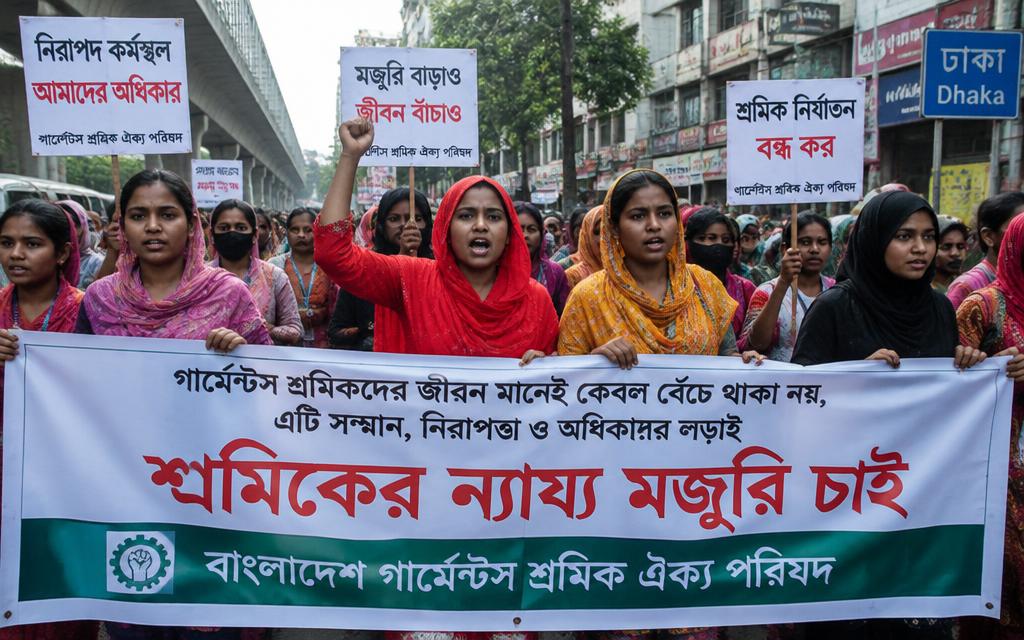
Hundreds of garment factories across Bangladesh have been forced to close after days of protests by workers demanding higher wages, in the most serious labour unrest the industry has faced in years.
Demonstrations spread through Dhaka's Mirpur area, Savar, Ashulia and Narayanganj, with protesters blocking roads and clashing with police, who fired tear gas to disperse crowds. Dozens of protesters have been arrested, and more than sixty factories in Ashulia alone declared a general holiday on Tuesday.
Workers are demanding a minimum monthly wage of 30,000 taka, more than double the current standard of around 12,500 to 13,000 taka, citing the rising cost of food, cooking gas and electricity. "We want the government to accept our demands and increase our wages," one worker told reporters. "They need to ensure that the prices of essential commodities remain affordable."
The ready-made garment industry employs around four million people, roughly half of them women, and generates nearly 40 billion dollars a year — about a tenth of GDP and more than 80 percent of export earnings. Bangladesh is the world's second-largest apparel exporter after China, supplying global brands including H&M, Primark, Zara and Uniqlo.
Industry leaders fear prolonged unrest could disrupt production and unsettle international buyers. The home minister has alleged that political elements are instigating the unrest to disrupt garment production, vowing a firm response, while police say those attempting to create disorder under the cover of worker protests are being arrested.